April 1 – 25, 2026
Opening Reception: Saturday, April 4, 2026 - 3:00pm - 5:00pm — Please RSVP to info@pdxcontemporaryart.com
Artist in Gallery: Saturday, April 18, 2026 - 1:00pm - 3:00pm
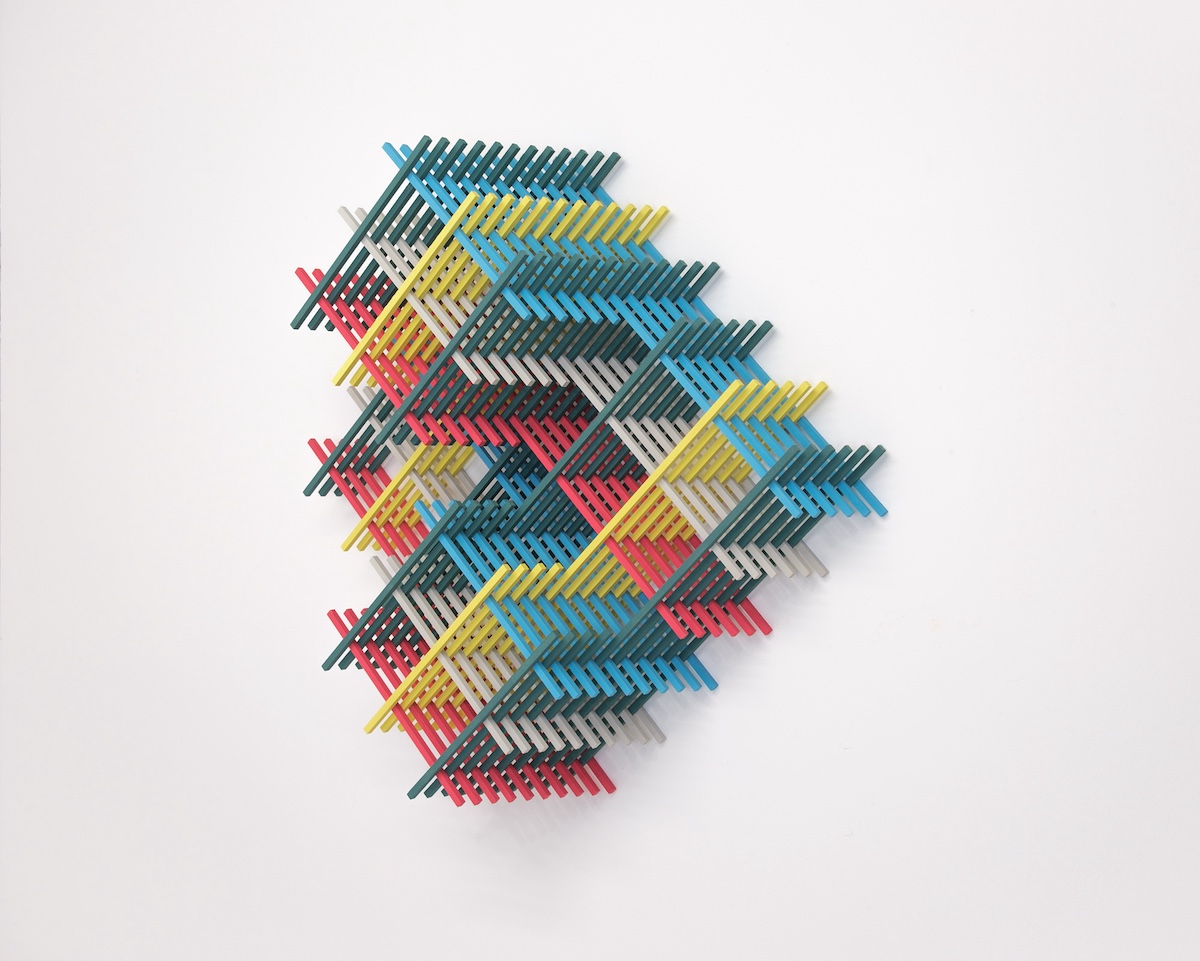
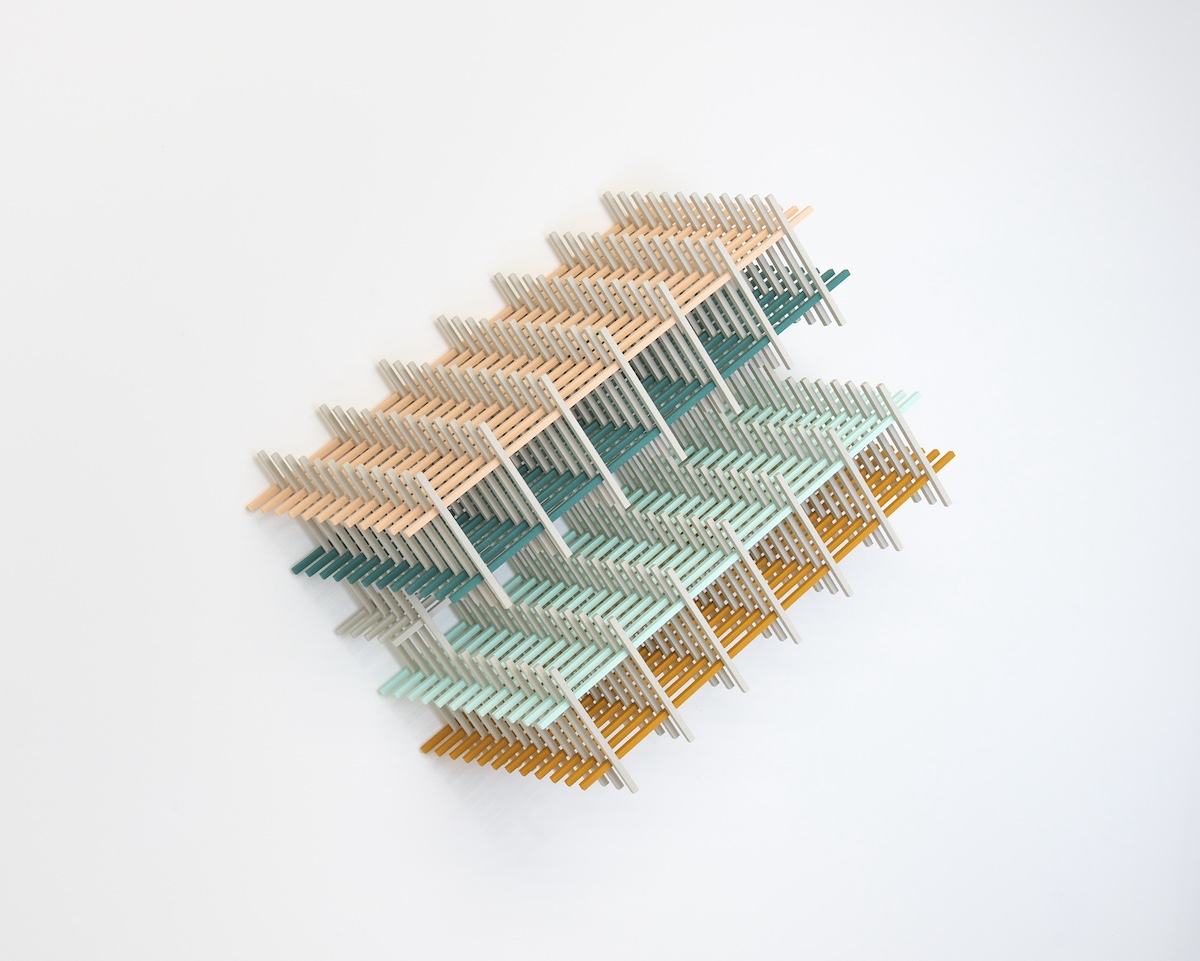
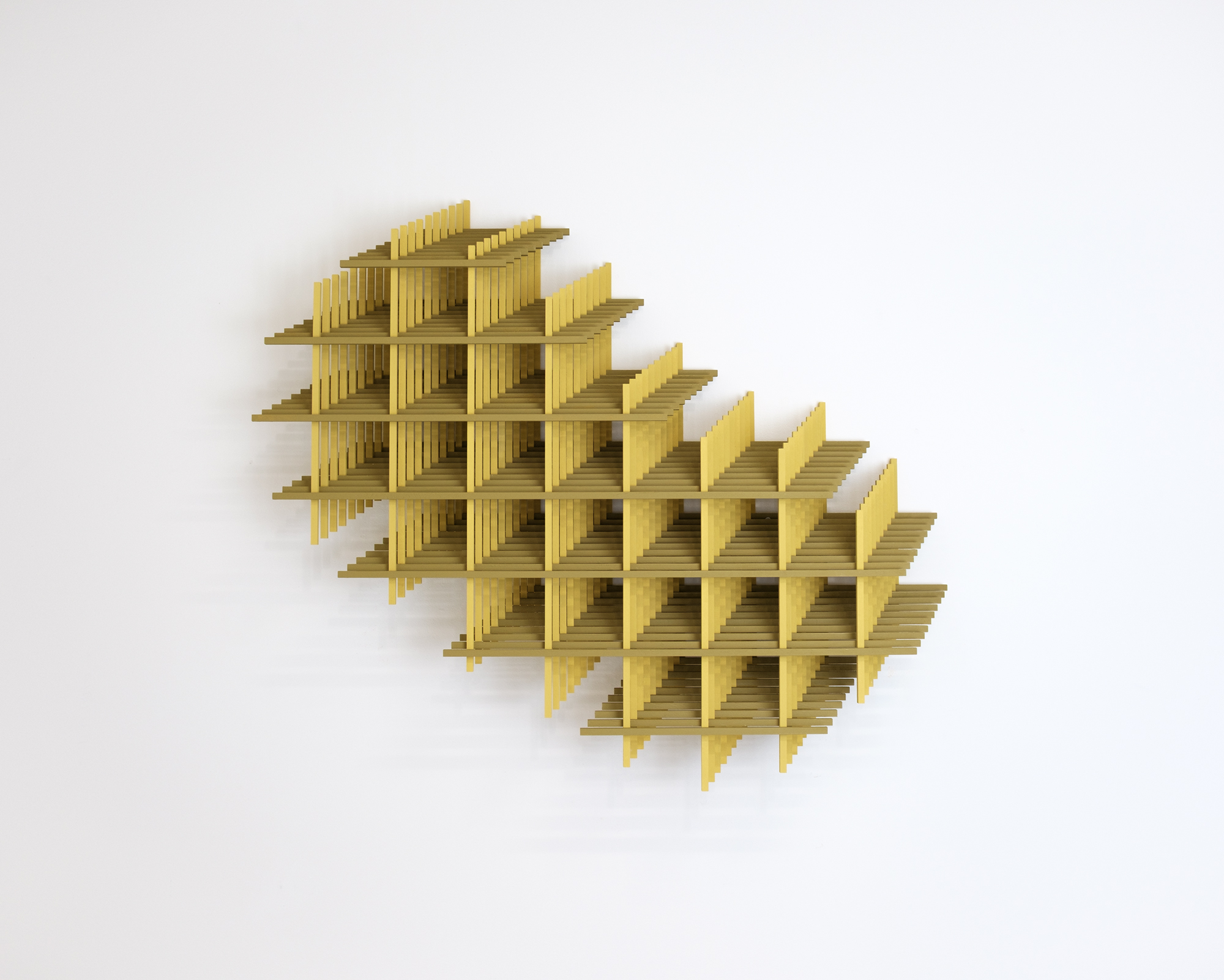
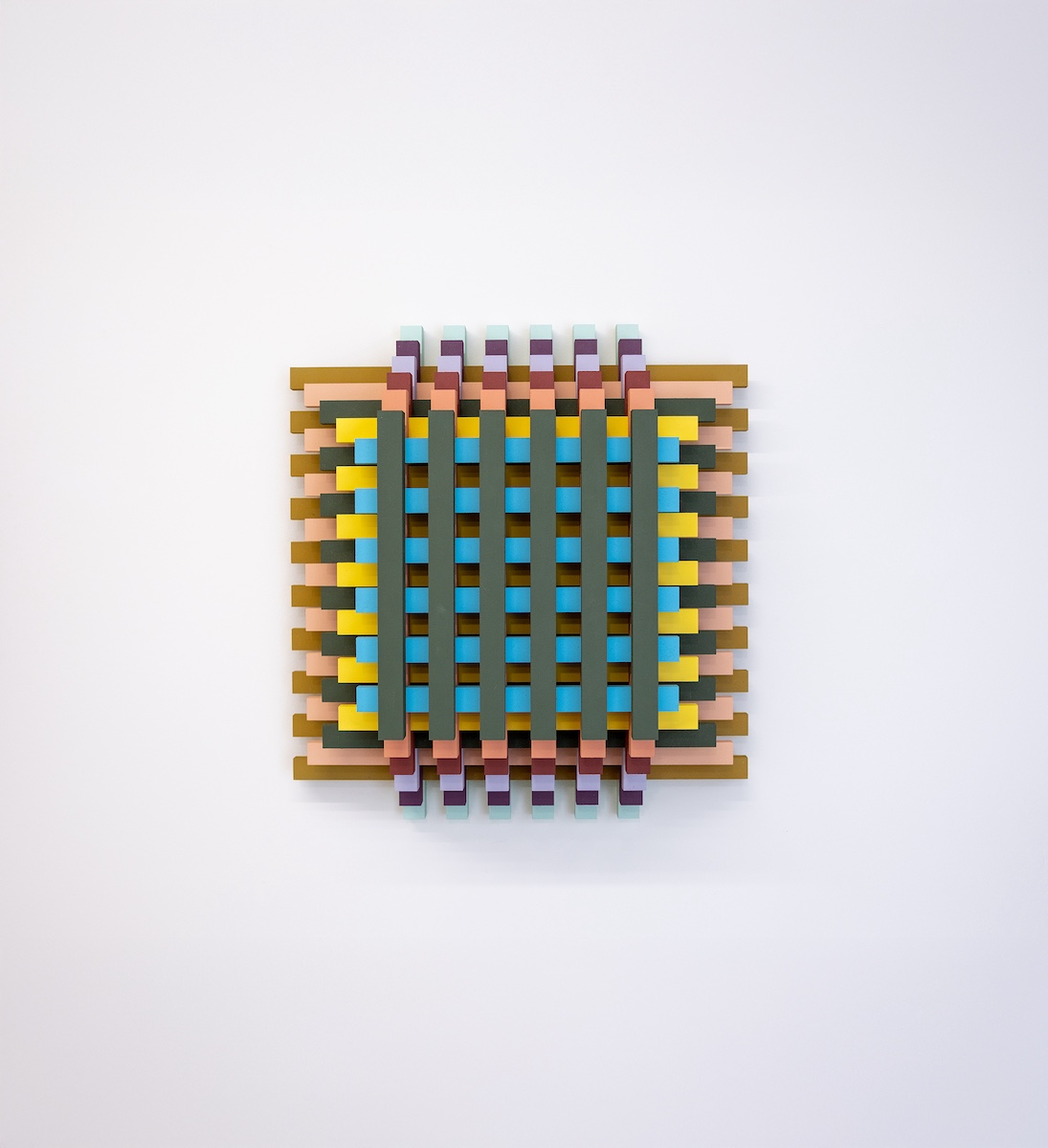
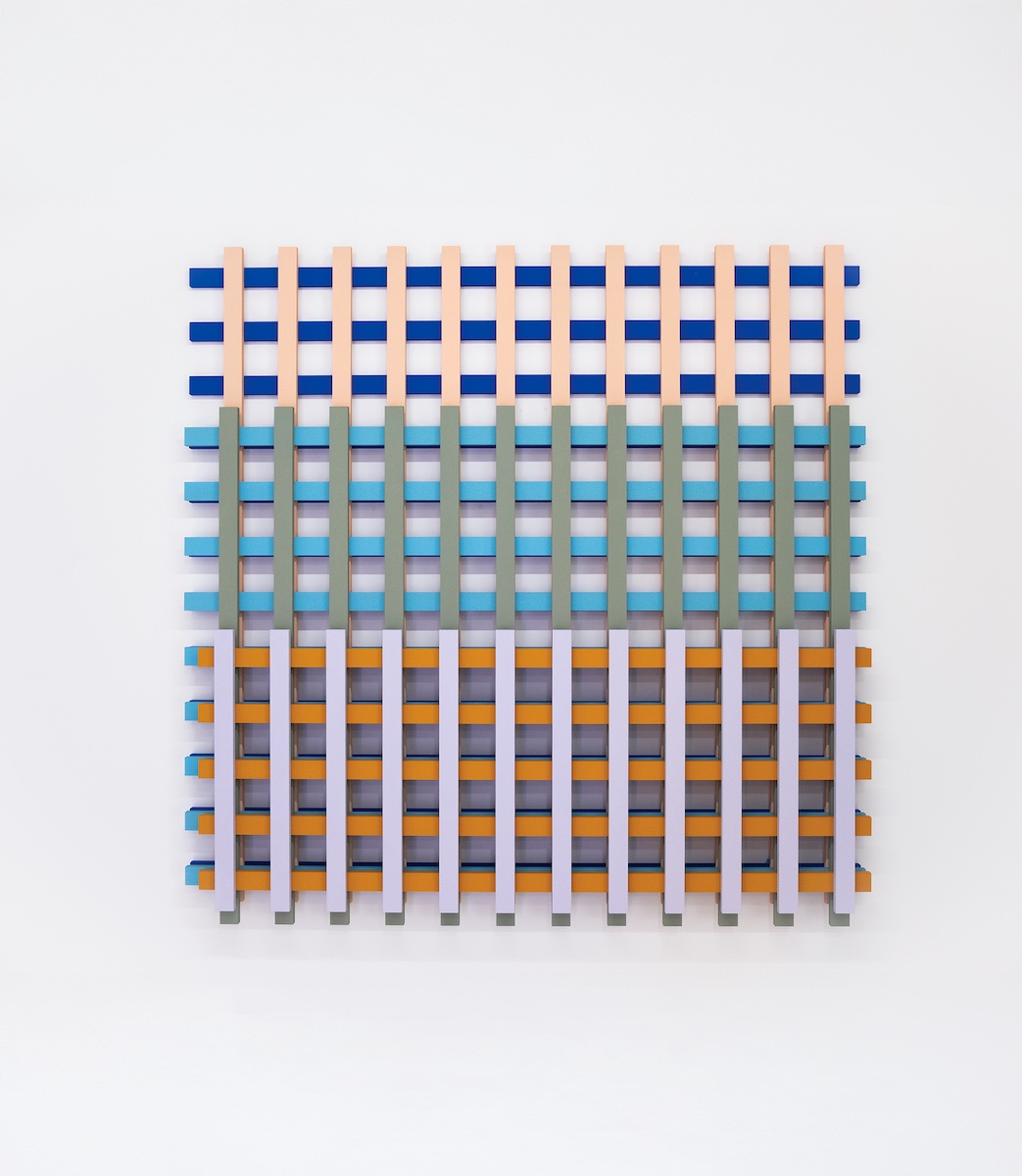
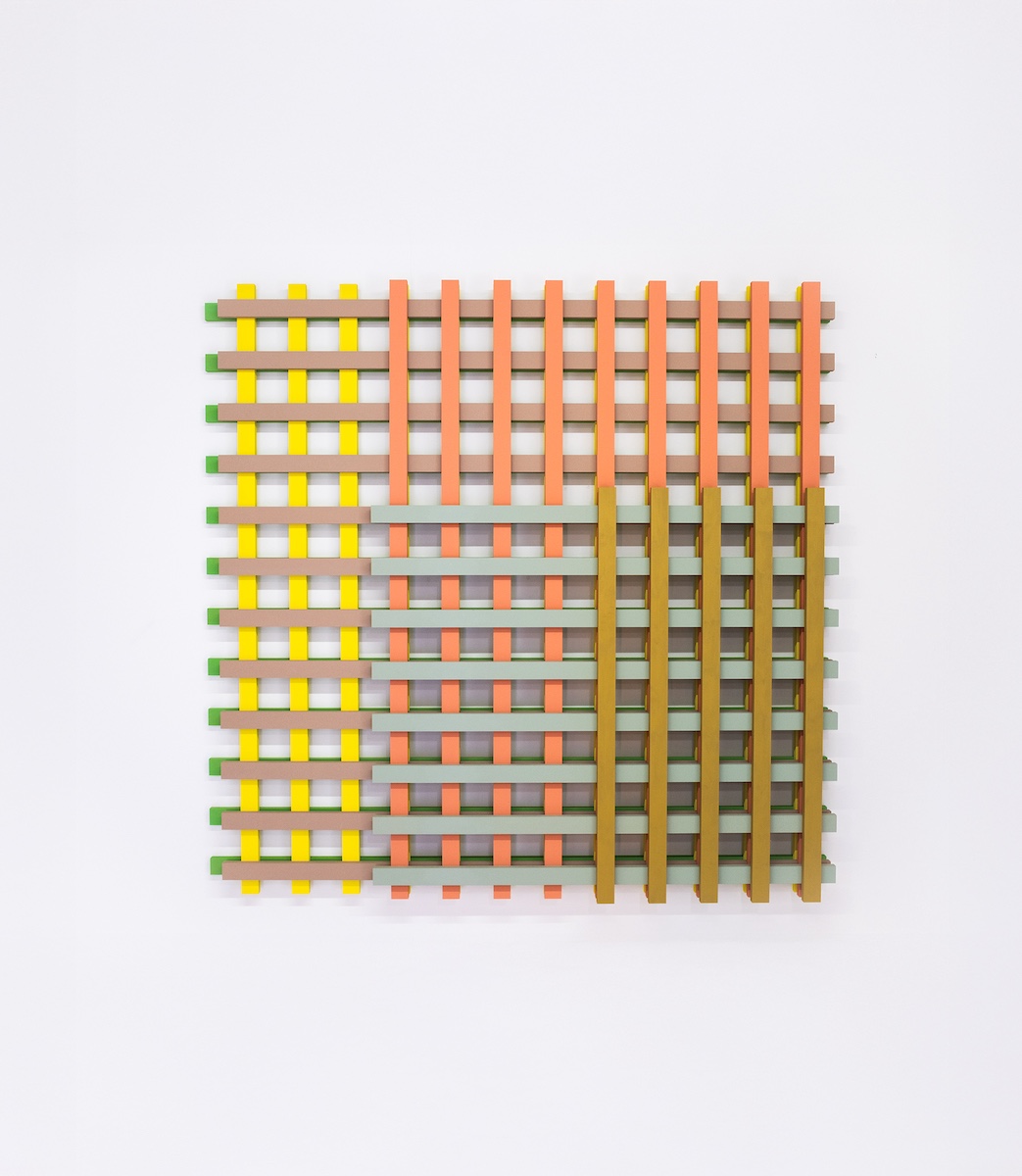
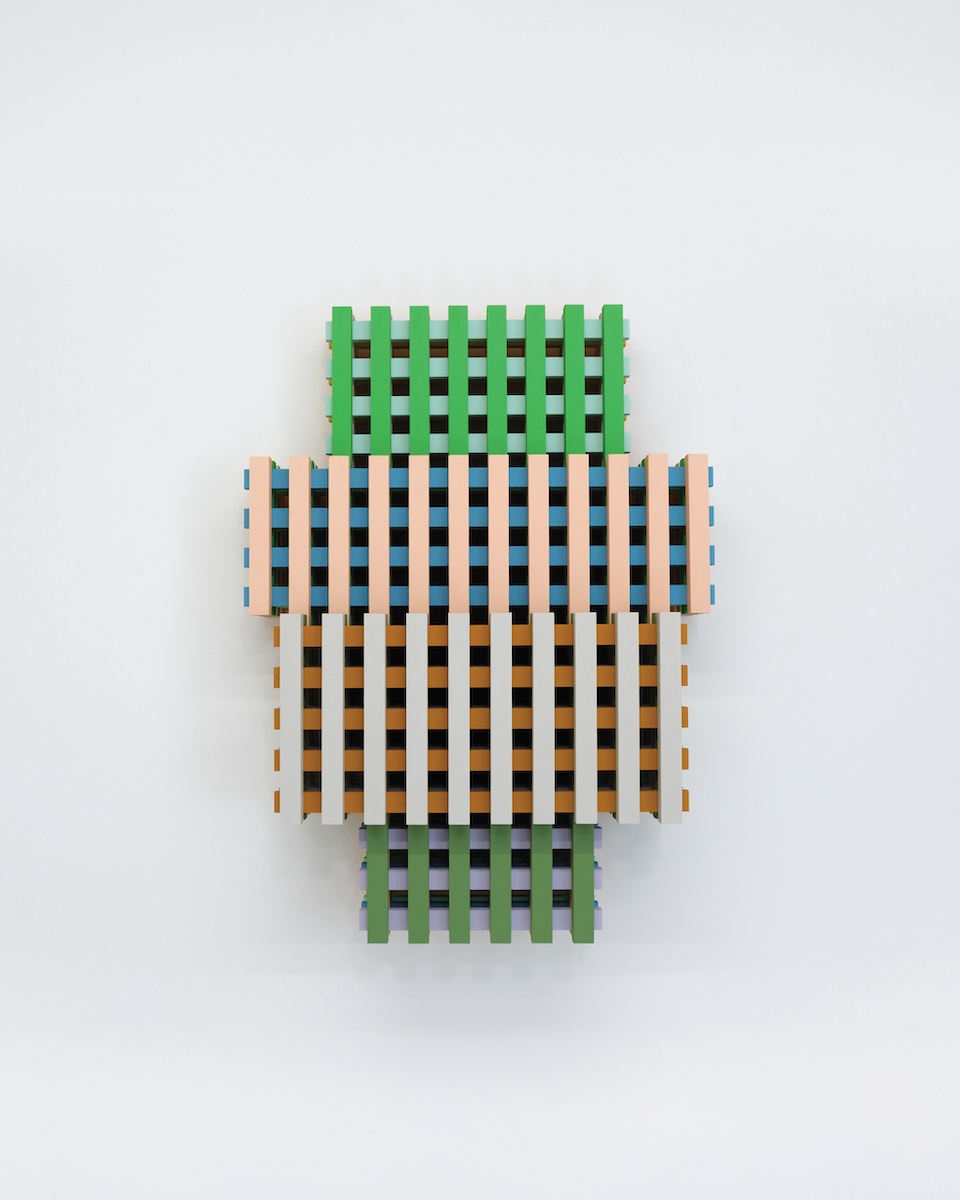
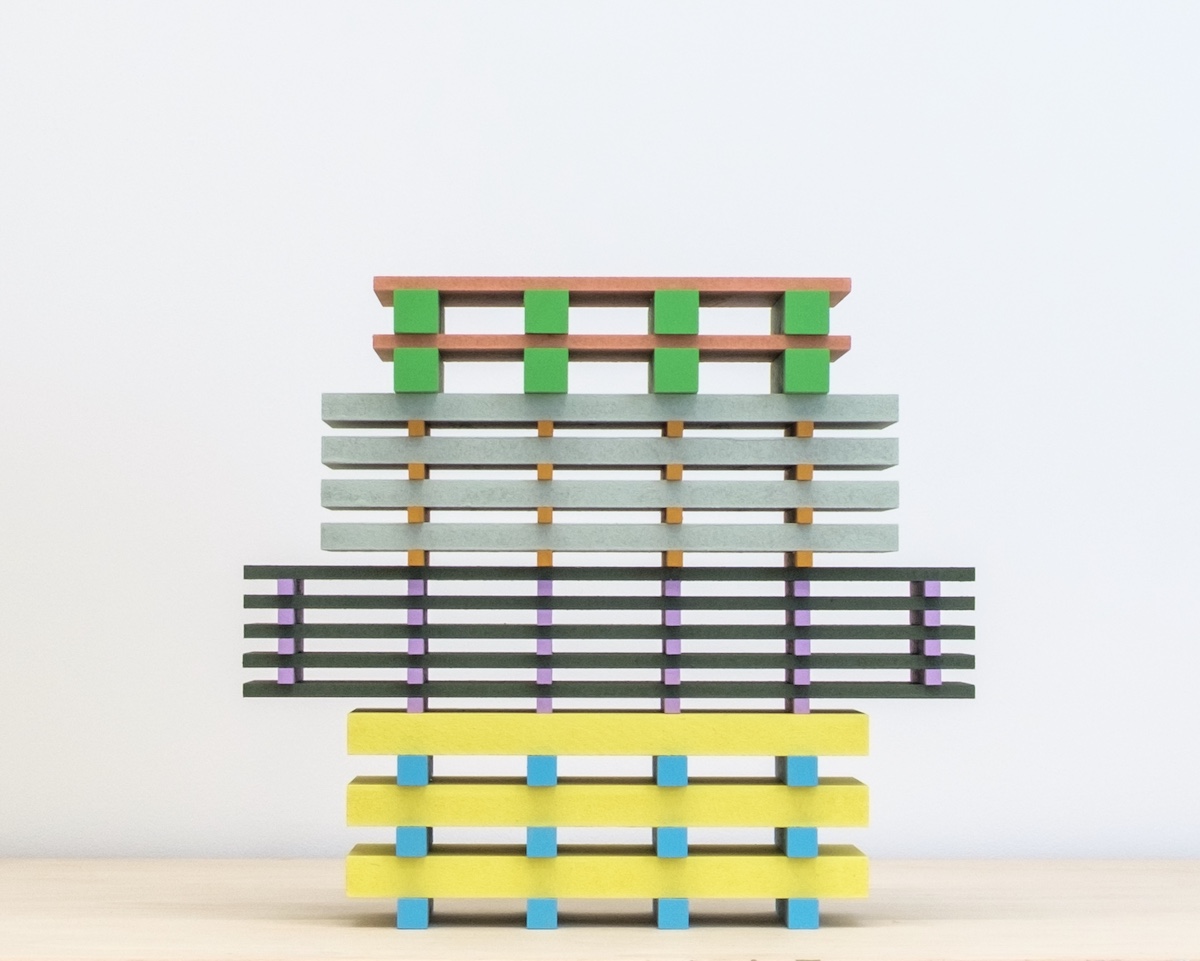
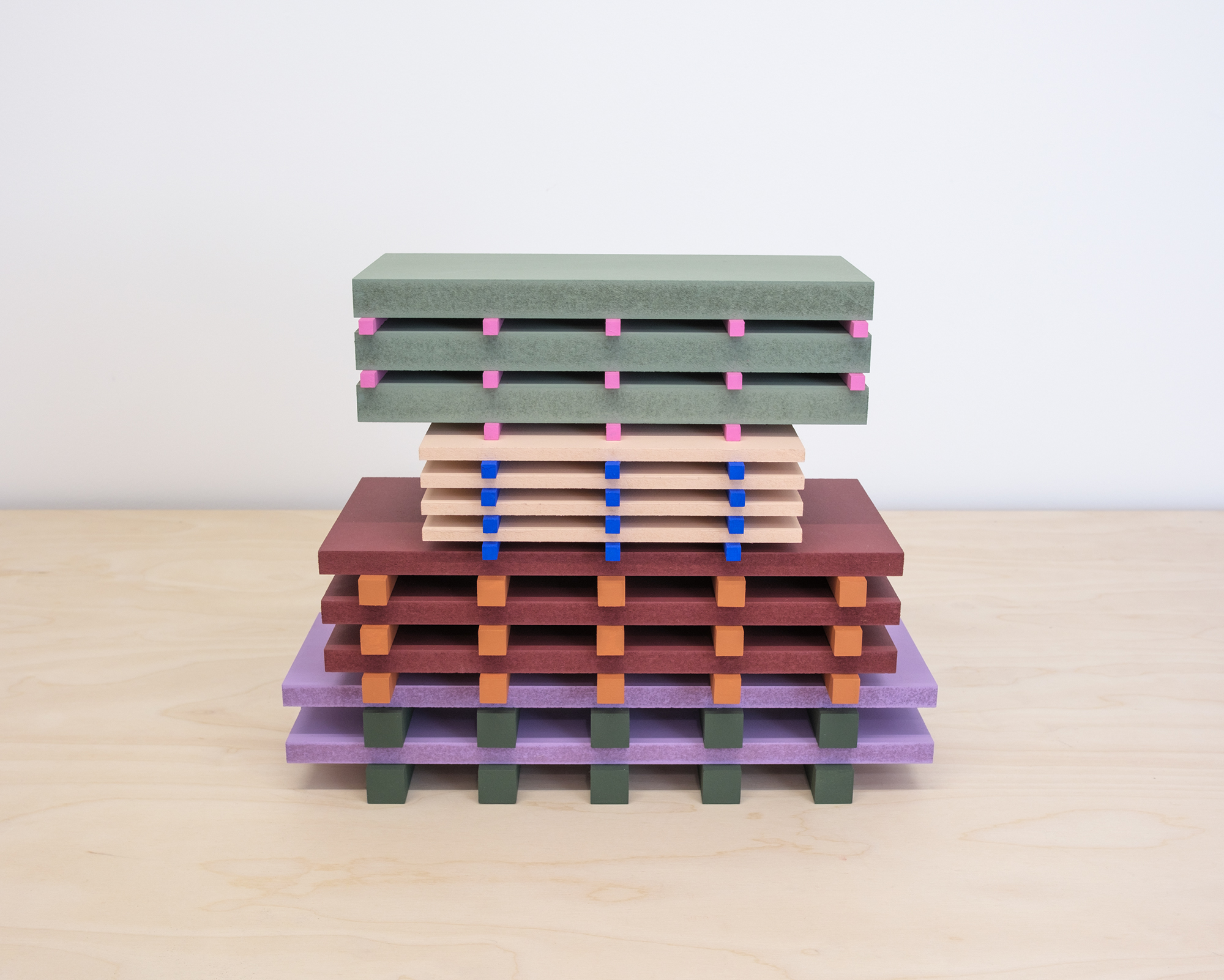
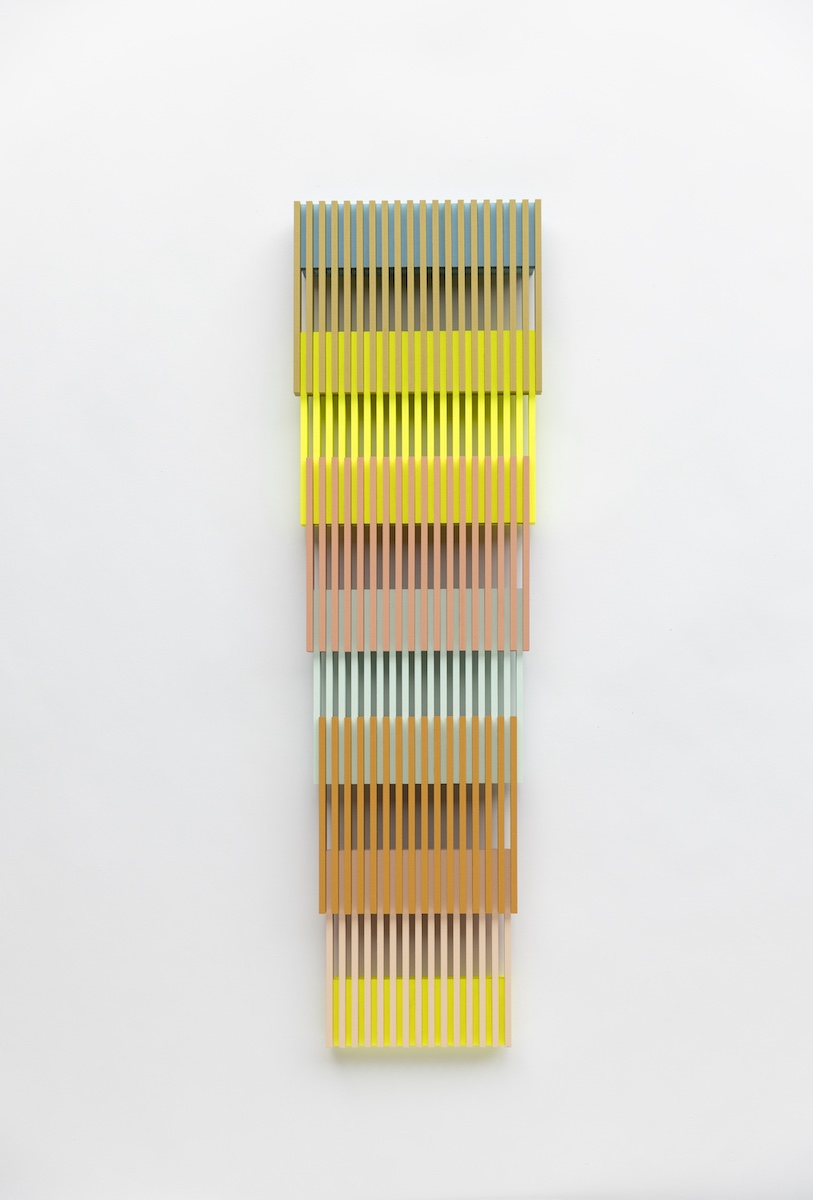
Inhabitations is the result of an action. When we absorb ideas or phenomena and make something out of them, we inevitably inhabit those things in some way. Areas of interest that influenced this body of work include: minimalist painting, light and space art, projection drawing techniques, modernist weaving, residential architecture, neighborhood walks, timber industry manufacturing, typography and graphics, reflections in windows, organization of natural systems, furniture carpentry methods…
My work is informed by the rich history and ongoing evolution of our built environment. The everyday act of making, its technical methods, material sources, and symbolic dimensions are both ancient and contemporary at the same time. A thousand year old Japanese shoji screen and a mass-produced wood lattice from the local big box store are estranged cousins, yes, but also equally authentic objects from which I can acquire a method of making or uncover a symbolic association. To honor this thinking, I name each series of work with reference to an existing element of methodology researched.
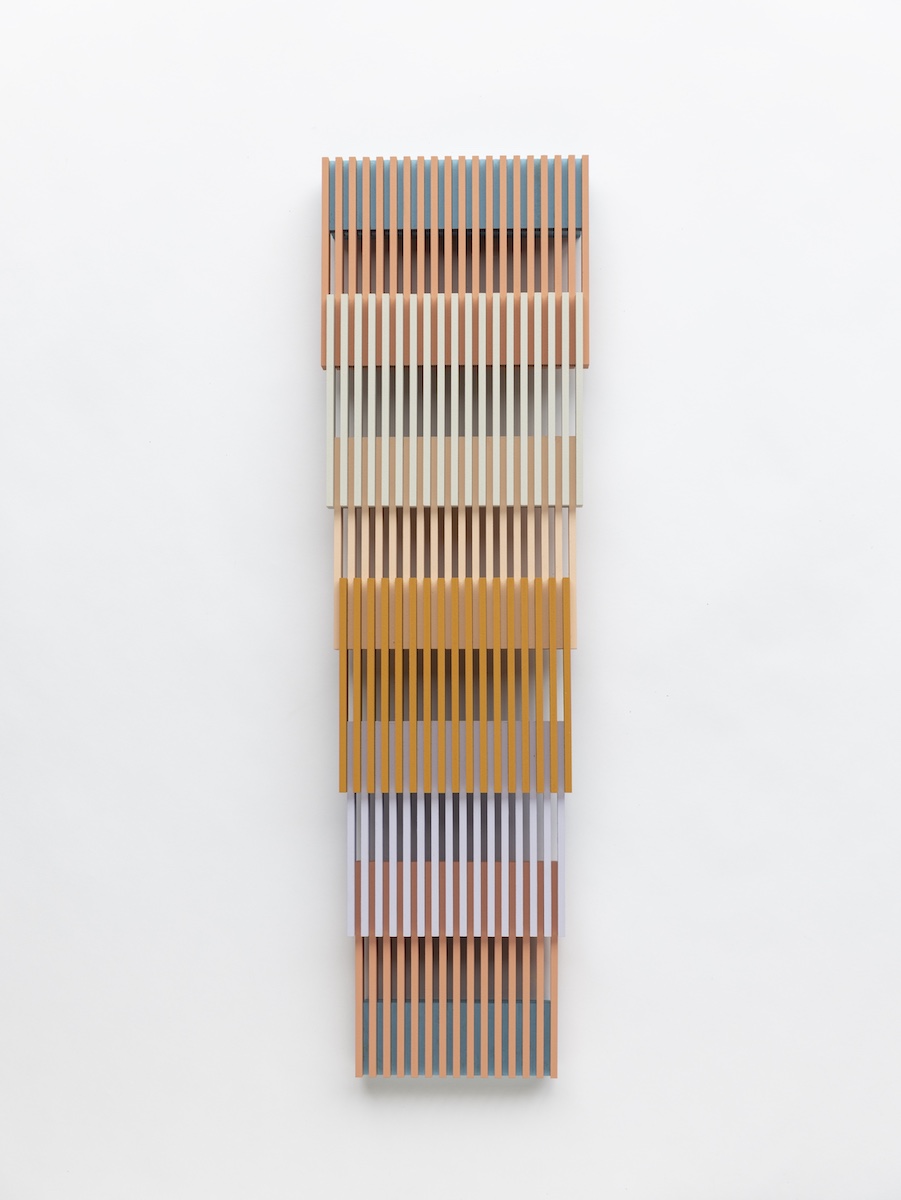
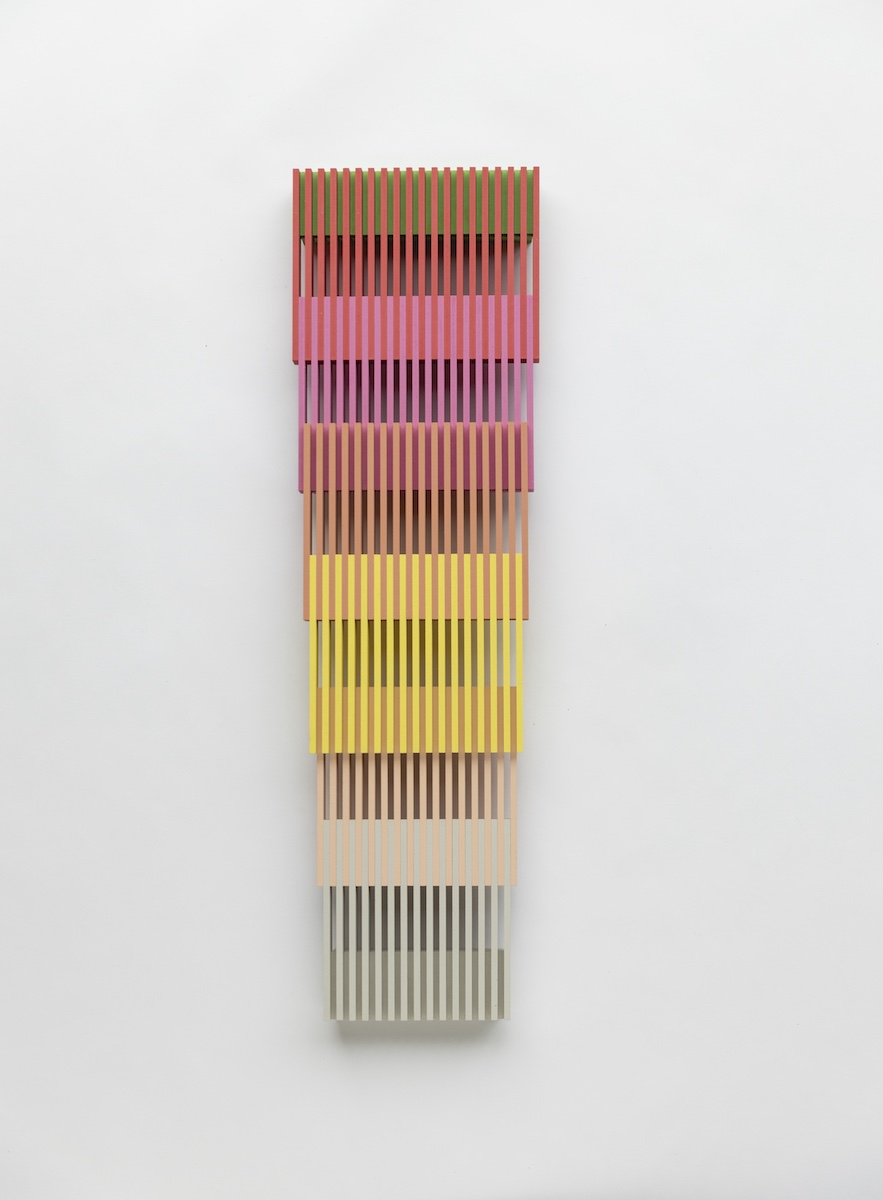
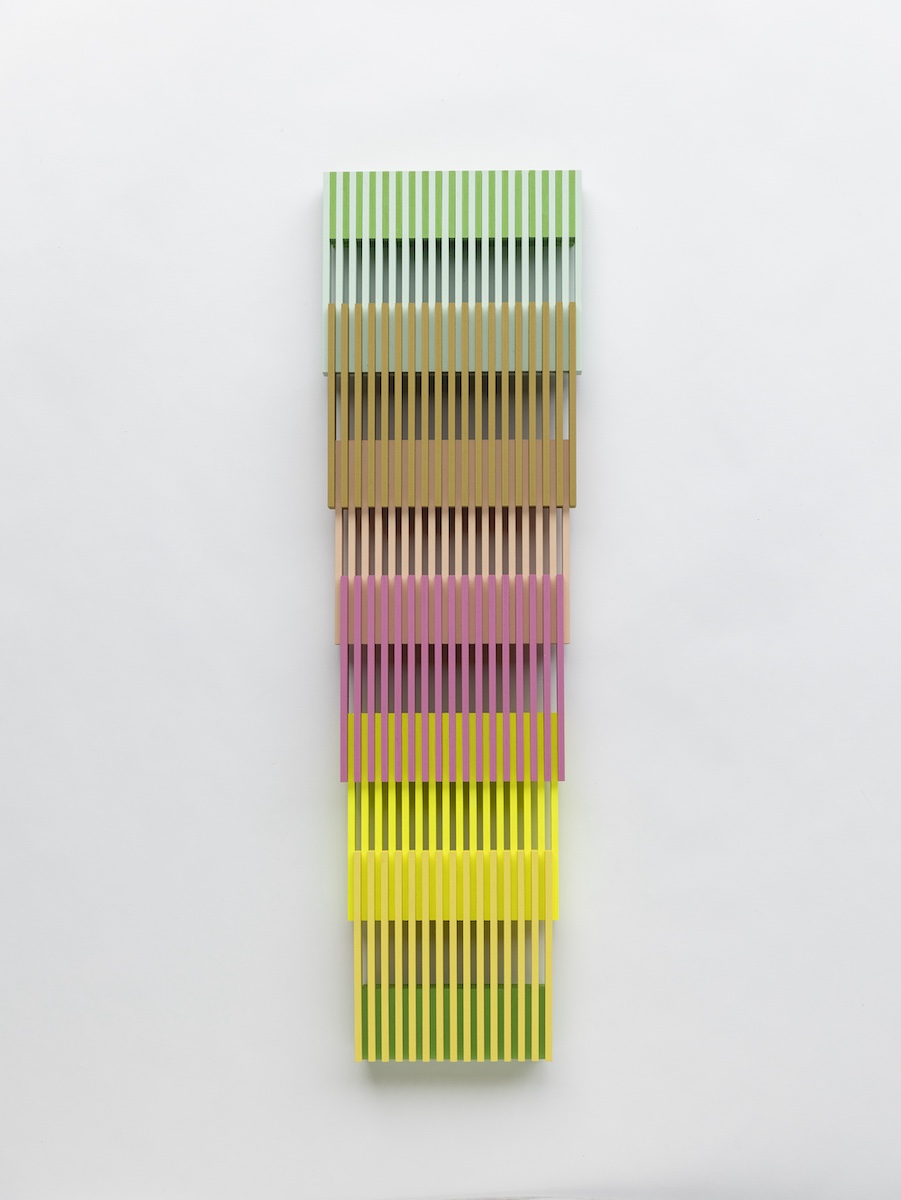
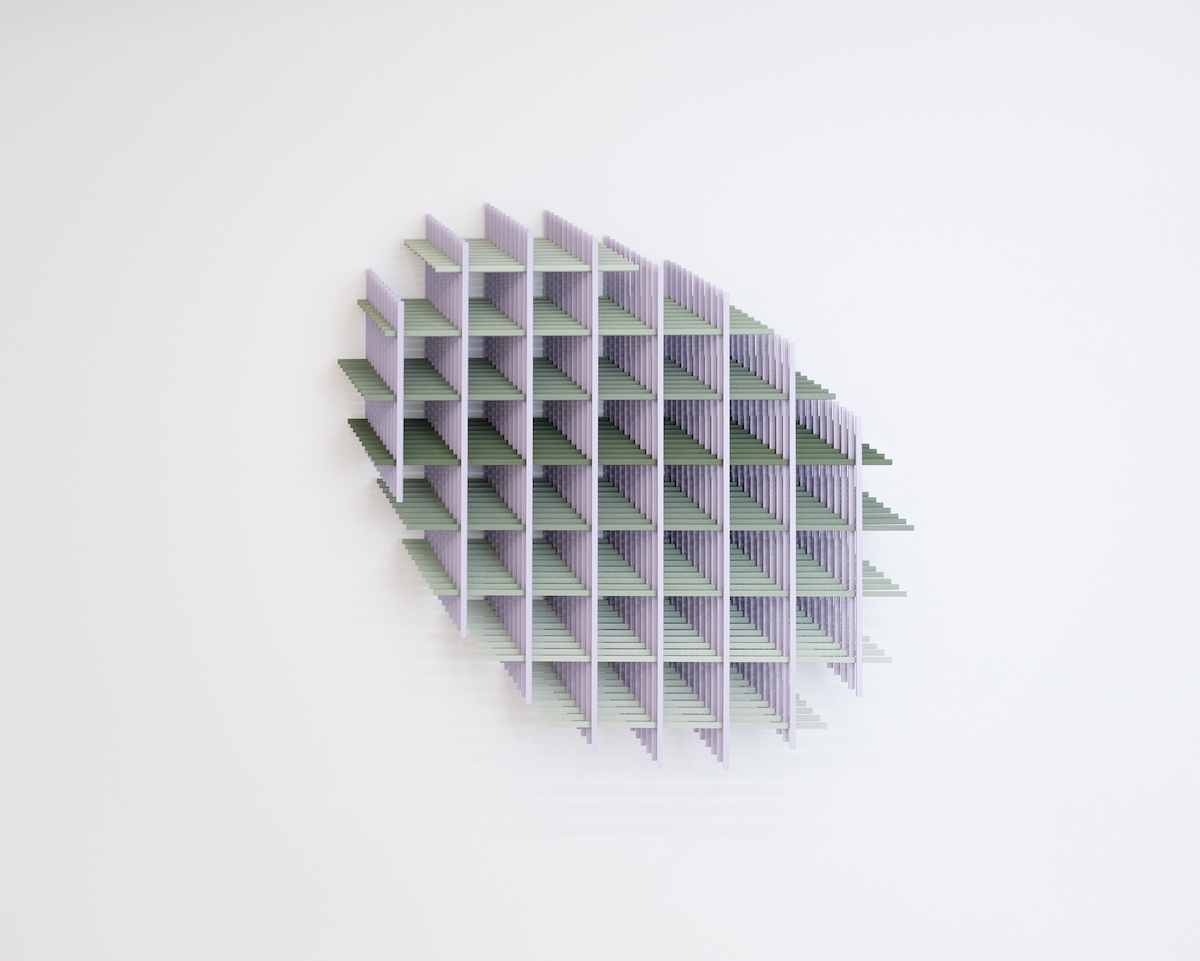
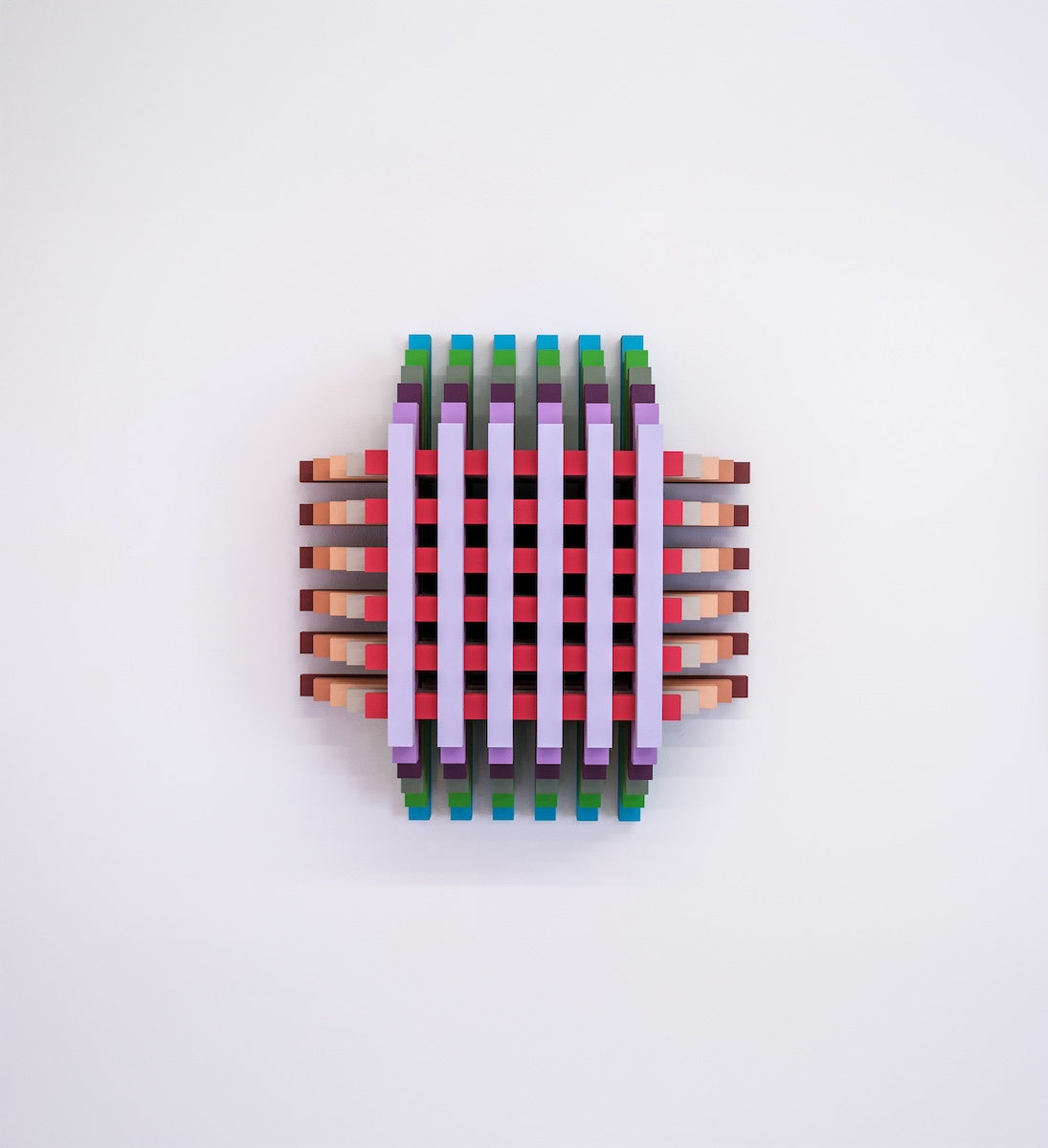
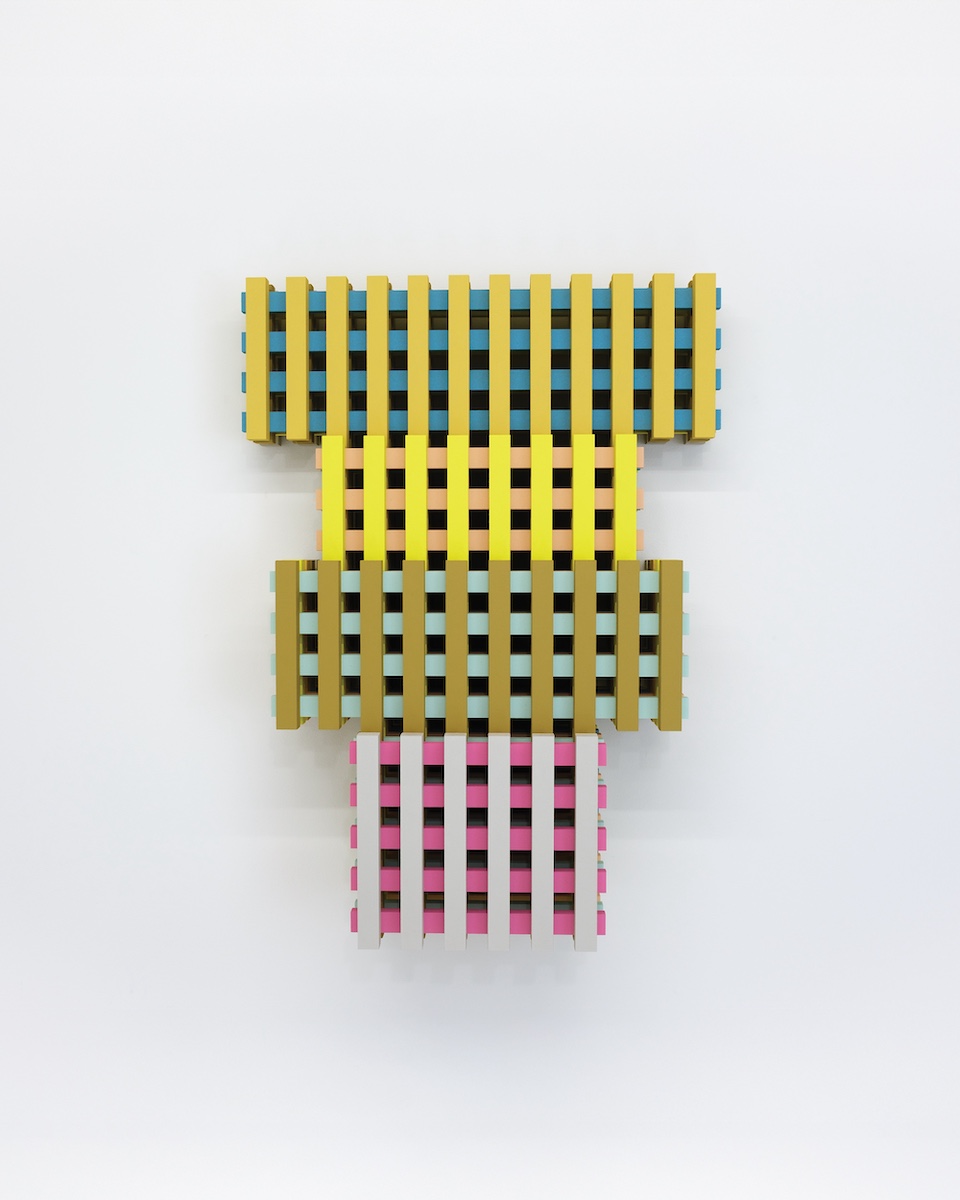
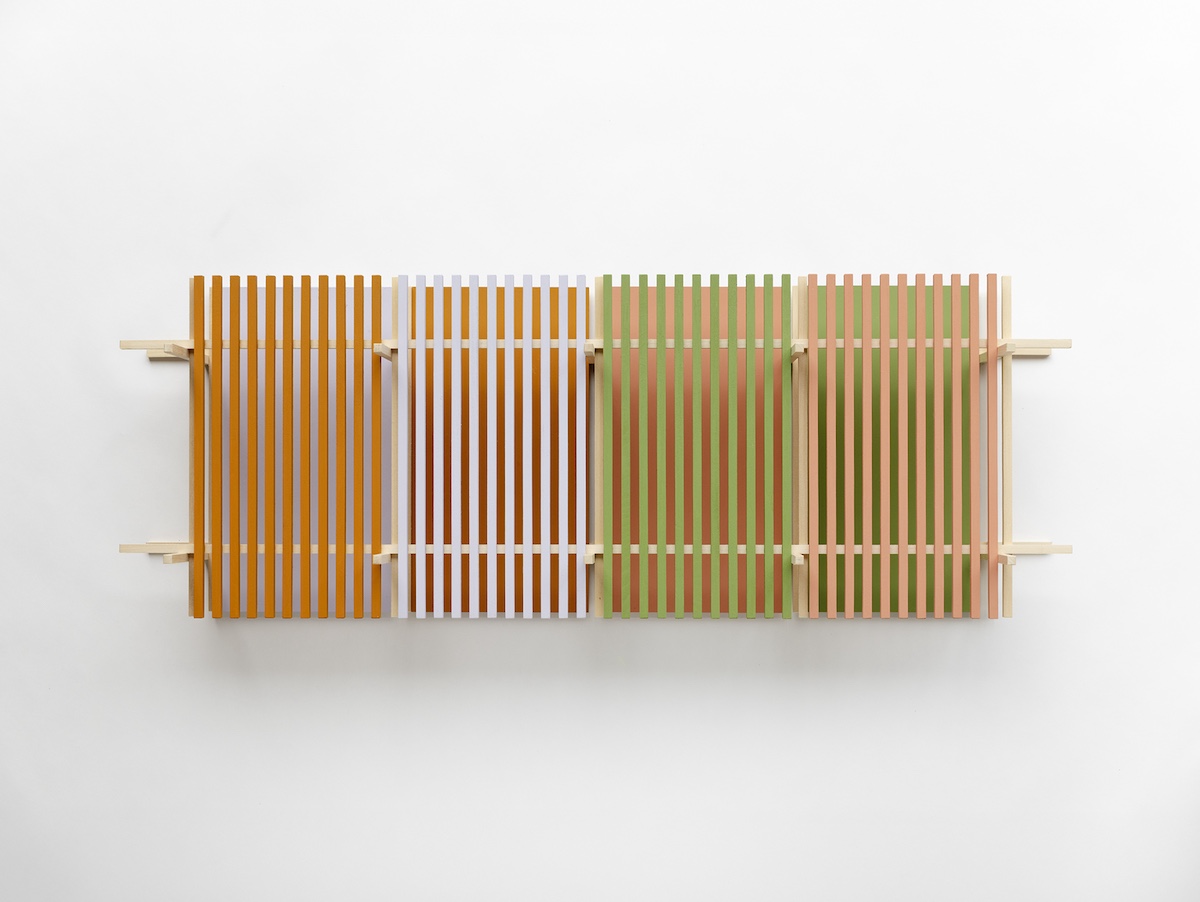
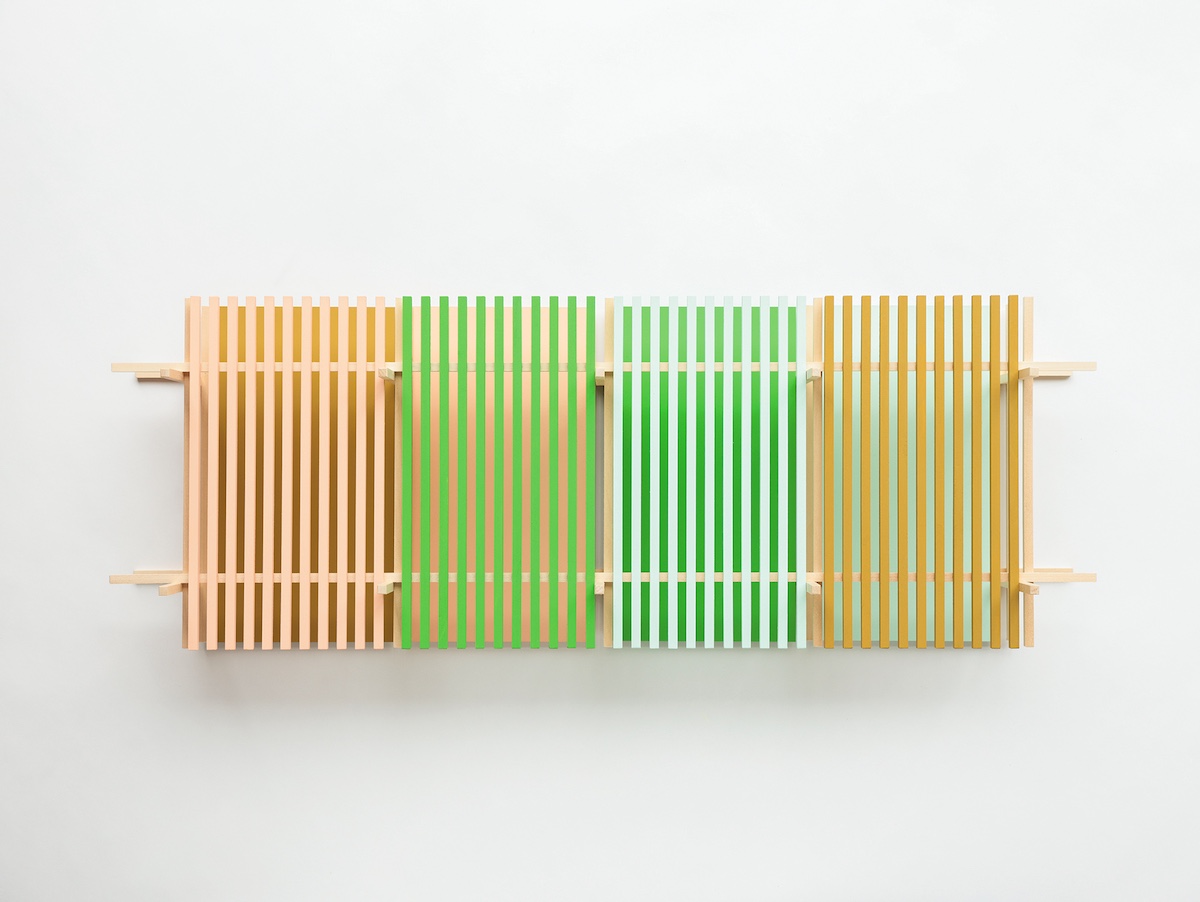
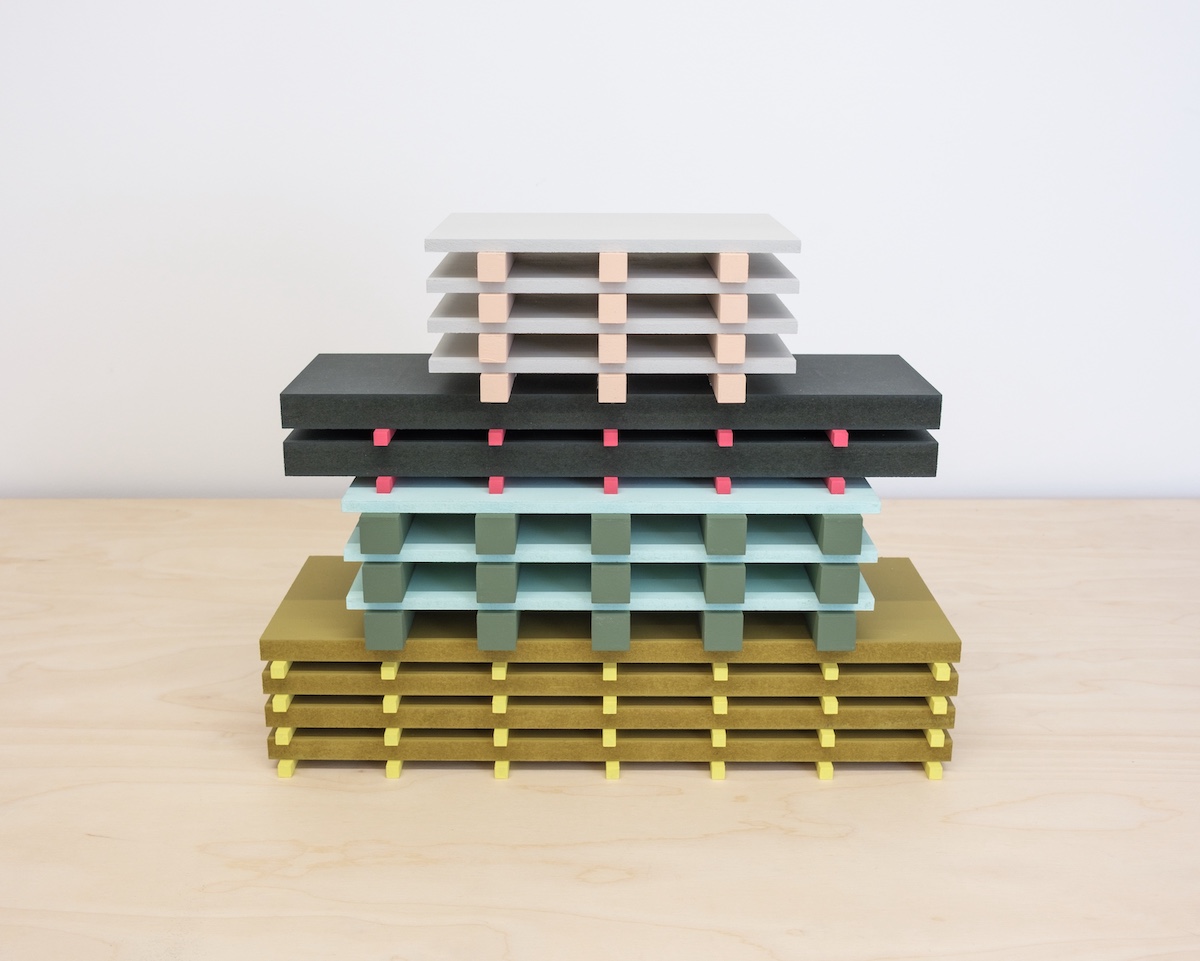
The manipulation of color is a central component and focus of curiosity that I come back to over and over. I work with color intuitively to bring about an emotional response but also to create spatial effects with tension between surface/volume and solid/void.
These are objects that reward movement. From a single vantage point, stacked layers of painted wood can resolve into a flat graphic image — a momentary, almost photographic snapshot of order. Shift your position and that order dissolves, revealing the physical depth and complexity beneath. It is this instability, the way perception shifts as we move through space, that sits at the core of my work.
The built environment is a deep source of inputs/outputs and provides a framework to interpret what I notice or experience. With a time frame longer than human-generational time but shorter than nature-based time, the "mid-tempo" of our built environment is somehow comforting. Possibly, as a result, I think of these artworks as a kind of perceptual artifact connected to the everyday, my own way of inhabiting the place where I live.
Artists